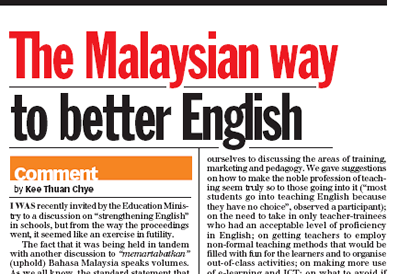
Kee Thuan Chye’s comment, “The Malaysian way to better English??? (The Sun, 14 August) finally lets the cat out of the bag on what really happens in many of the closed door high level brain storming meetings and consultations conducted by the Government on controversial or sensitive issues such as language policy, culture policy, history curriculum, religious concerns, etc.
The truth appears to be that in many of these dialogues (and even more so in the official seminars and workshops) the private sector and NGO participants invited to the meetings (in this particular case some of the top educationists in the country) have generally failed to voice their honest concerns and opinions. In one part of his letter, Thuan Chye explains that “most of us at the meeting were too polite to bring this out???. By “this???, he refers to a whole set of concerns related to the politicization of the language issue, the way in which the vision on English has “always been short term???, the fear of stoking “the ire of certain interest groups???, and so on.
Instead of discussing how narrow sectarian political interests have opportunistically taken the country backwards and ruined the future of our young children by this flip-flopping language policy and speaking their minds on how the official language policy in education needs to be reformed or the necessity of bringing back the English medium school, this group of presumably some of our finest professional minds in the country on language issues appears to have engaged in waffling or beating around the bush. As Kee notes, “we dutifully confined ourselves??? to issues such as “training, marketing and pedagogy??? and even “what to avoid if grammar were to be taught explicitly???!
Further Kee writes that the “meeting was a sad reflection of what we are – a people who are rich but are afraid to cultivate our wealth and let it blossom, and all because of our insecurities. We fear opening our minds so we deny our children access to our vaults???
That indictment is of course appropriate for the political opportunists and language supremacists who have jumped on the “memartabatkan??? Bahasa Malaysia bandwagon. But it is equally an indictment of all at the meeting who had the privileged opportunity to put their honest concerns and opinions across, and who failed to do so.
There may be important psychological underpinnings that explain why many government-conducted dialogues with selected individuals or organizations from the larger society end up in blind alleys or dead ends. One Malay colleague explaining this phenomenon to me recently has stressed the psychological and cultural advantage and superiority of the civil service conveners organizing and running these meetings and the position of inferiority and subordination of the marginalized minority groups and individuals invited to them. Perhaps this is the case but what is probably just as important are the material and personal advantages that come with either ingratiating or playing along with the prevailing system or at least not offending it, and the disadvantages that are perceived to come along with dissent or disobedience.
Kee ends by pointing out “It’s as we say, the Malaysian way???. I hope he is wrong. It may have been the way of those who have been invited to these meetings and who for various reasons have failed to speak their minds or chosen to look the other way. For the sake of our future, this Malaysian way needs to be replaced by another one based on respectful but free, frank and honest discourse, however sensitive the subject is. After all if we cannot speak our minds in private, how can we ever have a larger public discussion on the matters that we deem important to our lives?